
Introduction
Artificial Grass of Kingwood installs turf in The Woodlands with tree-preservation-first base preparation, organic-soil complete removal, and Spring Creek watershed drainage planning.
Loading content...
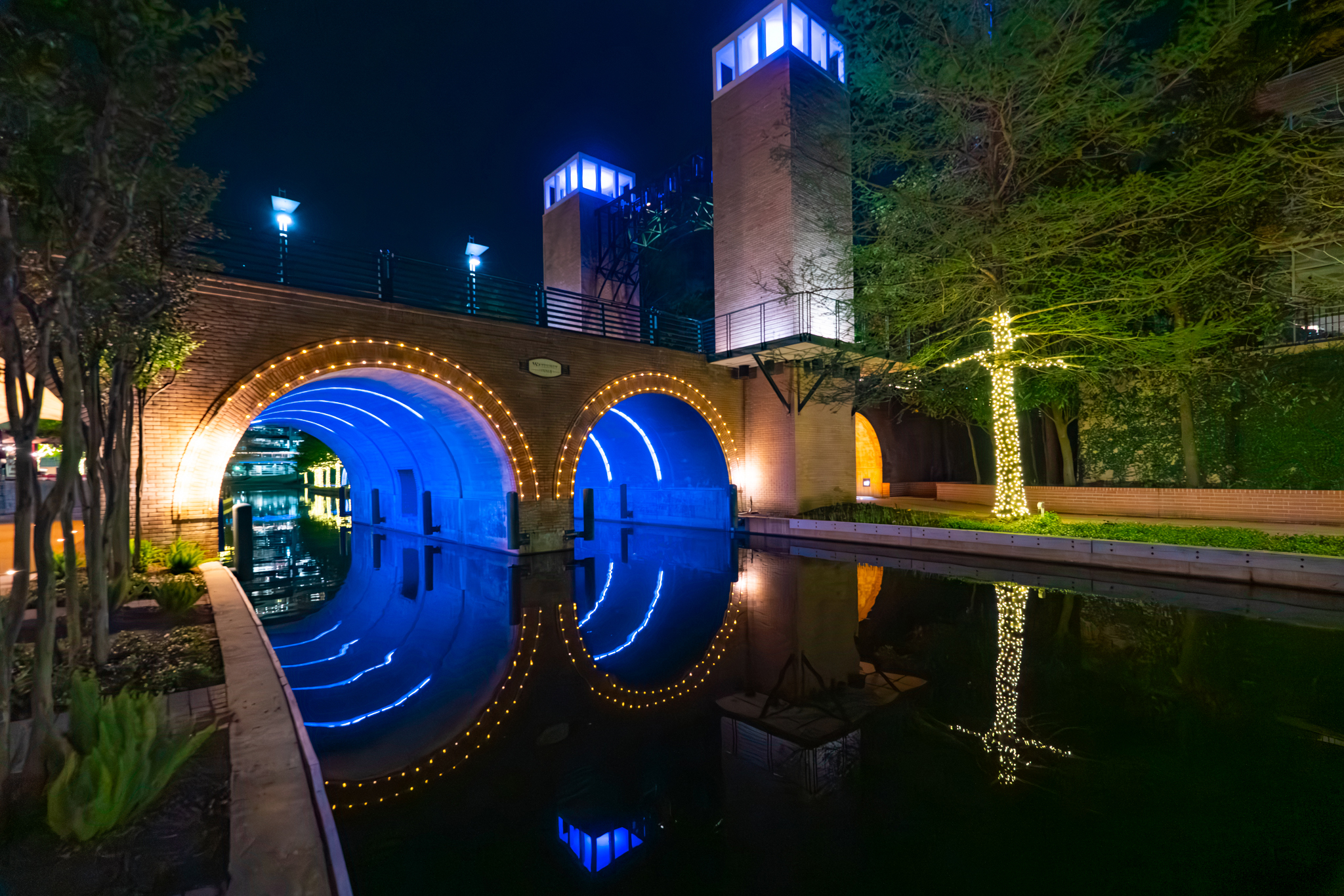
Planned canopy neighborhoods, organic-rich forest soils, and the Spring Creek watershed — turf built for The Woodlands' environmental standards.
The Woodlands is arguably the most ecologically deliberate planned community in the north Houston market. Its development framework was built around preserving existing tree canopy rather than clearing it, which means the community has more square footage of mature pine and hardwood canopy per residential property than anywhere else in Artificial Grass of Kingwood's service area. That environmental heritage creates a residential outdoor landscape where natural grass persistently fails under shade — and where homeowners replacing that failing lawn want a solution that works within the community's aesthetic and environmental standards rather than against them. Artificial Grass of Kingwood's approach to The Woodlands specifically prioritizes the tree. Every installation in this market begins with a tree-preservation assessment: we document canopy extent, identify surface and near-surface root systems, and develop a base preparation plan that treats root avoidance as a primary constraint rather than an afterthought. The forest soils in The Woodlands — particularly in the older villages like Grogan's Mill, Panther Creek, and Indian Springs — are built on decades of organic decomposition that creates a rich but highly compressible top layer. That organic layer cannot serve as a base substrate for artificial turf. We excavate it completely before base preparation and handle it as a soil amendment rather than fill, which is both better for tree health and better for base stability. Spring Creek and its associated drainage network define The Woodlands' hydrological character. Many properties in the southern villages and those that back to the Spring Creek greenbelt have specific drainage outlet requirements tied to the creek system's watershed position. We treat those properties with the same watershed-aware drainage planning we use for Lake Houston-adjacent properties in our primary service area. The Woodlands also has a more design-conscious homeowner base than most northeast Houston markets — clients here often have specific aesthetic requirements about how transitions are handled, how the turf edge meets existing landscape features, and what the finished surface looks like from the street. We accommodate those requirements without compromising the functional aspects of the installation.
Artificial Grass of Kingwood installs turf in The Woodlands with tree-preservation-first base preparation, organic-soil complete removal, and Spring Creek watershed drainage planning.
The highest canopy density in our service area, organic-rich forest soils that require full excavation before base work, Spring Creek watershed drainage sensitivity, design-conscious homeowners with aesthetic transition requirements, and planned-community standards for visible outdoor improvements.
Tree-preservation assessment before any excavation, complete organic-layer removal, breathable root-barrier membrane throughout the installation, Spring Creek watershed drainage outlet design, and precision transition detailing to meet homeowner aesthetic standards.
A finished surface that preserves The Woodlands' signature tree canopy, drains correctly into the Spring Creek watershed system, and meets the aesthetic standards of one of north Houston's most design-aware residential communities.
Tree-preservation assessment, canopy mapping, organic-layer excavation, root-flare documentation, breathable root-barrier installation, base compaction, turf product selection by shade zone, precision transition detailing, infill, drainage test, and close-out.
Woodlands installations are scheduled from our Kingwood base on a dedicated north Houston route and cover all village sections from Grogan's Mill to Sterling Ridge.
The Woodlands' planned-community character means nearly every residential and commercial property has significant canopy coverage and tree-preservation requirements that drive the installation approach.
Grogan's Mill, Panther Creek, Indian Springs, and other older Woodlands villages with the deepest organic soil layers and the most established canopy root systems.
Homes backing to the Spring Creek greenbelt where watershed drainage planning and wildlife-pressure edge reinforcement are additional installation considerations.
The Woodlands commercial properties and HOA-managed common areas where design quality and low-maintenance performance are both operational requirements.
The Woodlands' forest-soil depth, canopy density, Spring Creek watershed position, and community aesthetic standards create the defining installation variables for this market.
Older Woodlands villages have organic layers from decades of leaf and needle decomposition that can be six to eight inches deep. This layer must be fully removed before base preparation — it is too compressible to serve as a stable base substrate.
Properties near the Spring Creek system and the southern village sections require drainage outlet design that directs water toward established channels. We assess watershed position before designing the drainage component of any Woodlands installation.
The Woodlands has more heavy-shade yards than any other community in our service area. We select turf products with lower pile height and tighter face weight for shade zones, which performs better under organic accumulation and looks better in indirect light.
Woodlands clients are typically design-aware homeowners in established villages dealing with forest-soil turf failure, HOA managers overseeing common area maintenance, and commercial contacts with high-visibility landscape requirements.
Long-term Woodlands residents in the older villages who have watched natural grass fail under the community's signature canopy and want a solution that respects the tree preservation principles the community was built on.
The Woodlands HOA contacts managing common areas, entry corridors, and shared outdoor spaces where design quality and minimal maintenance are both required.
Woodlands commercial properties along Research Forest Drive and the Hughes Landing corridor where professional landscape quality is visible to the market and maintenance overhead needs to be controlled.
Woodlands installations are among the more involved in our service area due to organic-layer excavation requirements and root-mapping protocols. Most residential installations in the older villages run three to four days. Newer village sections with shallower organic layers run two to three days. We schedule a tree-preservation assessment visit before confirming the installation timeline.
Artificial Grass of Kingwood serves The Woodlands, TX and the north Houston market including Spring, Conroe, Kingwood, and Humble.
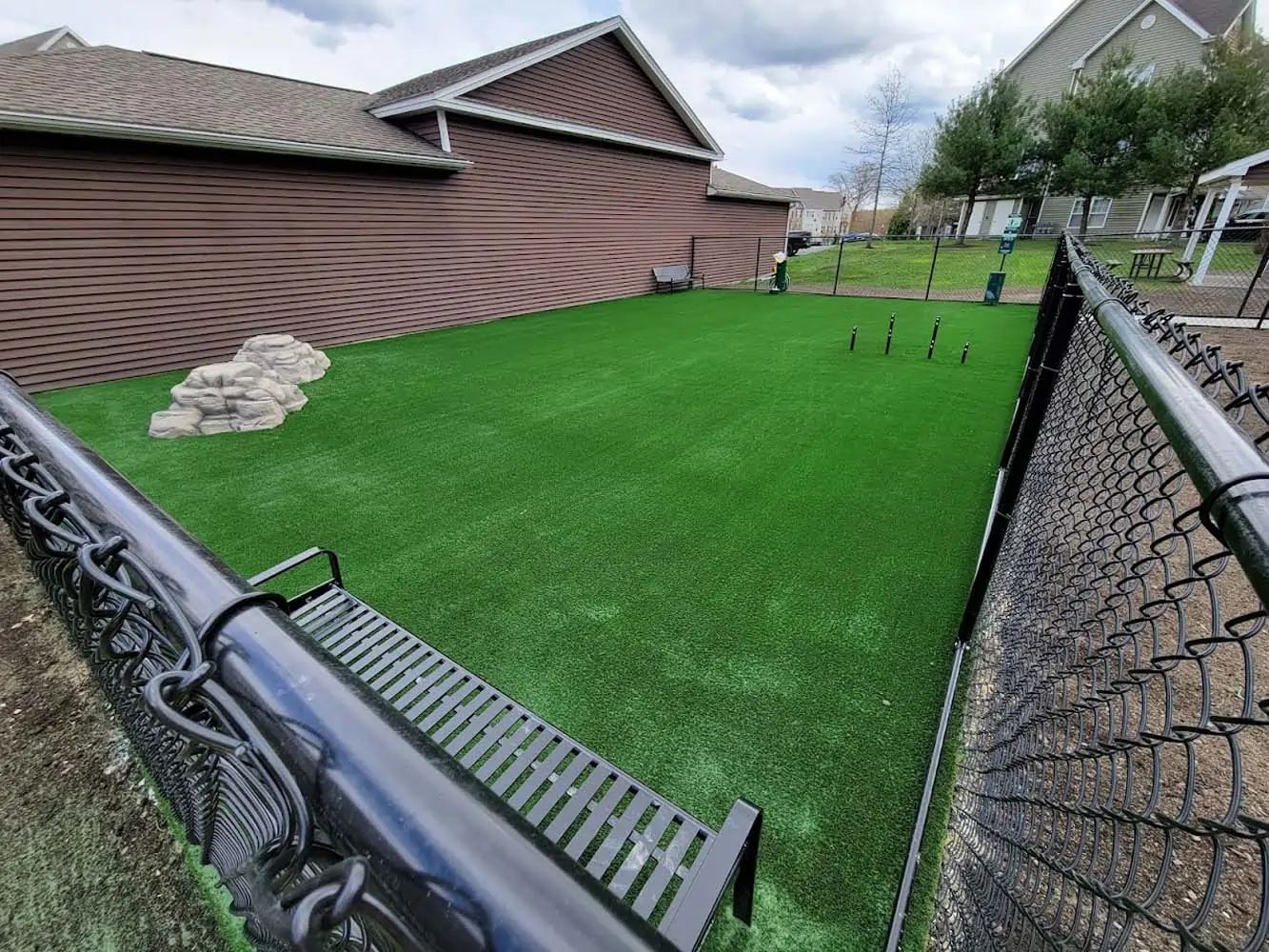
Full-property turf in The Woodlands with tree-preservation-first base preparation and Spring Creek watershed drainage planning.
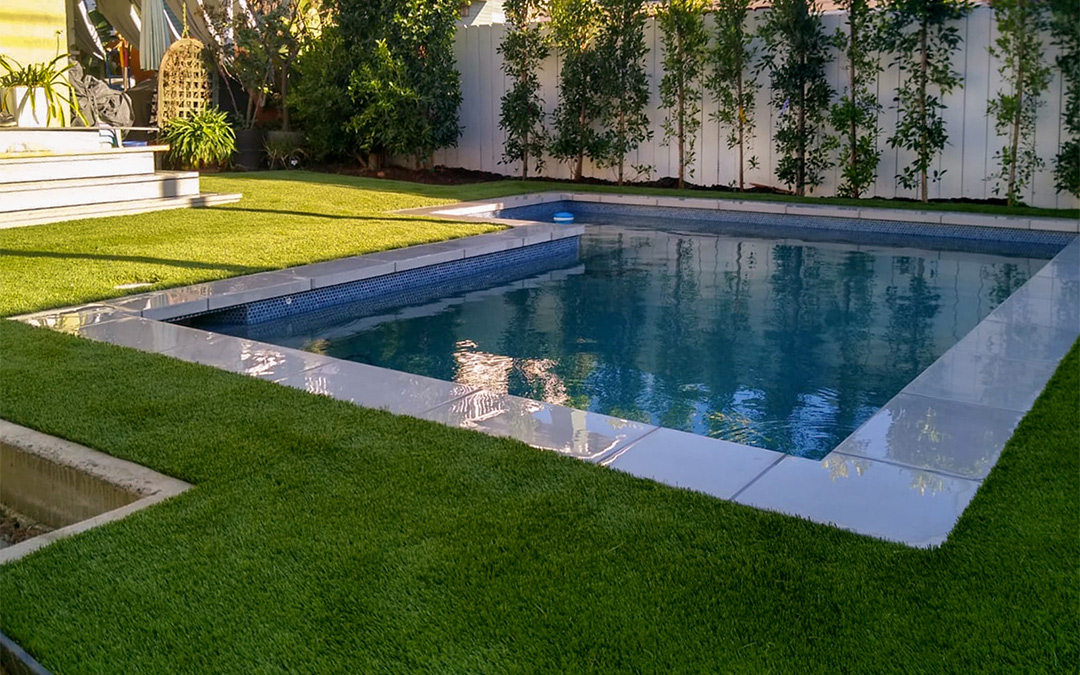
Residential shade-yard turf for The Woodlands homes in Grogan's Mill, Panther Creek, Indian Springs, and other village sections.
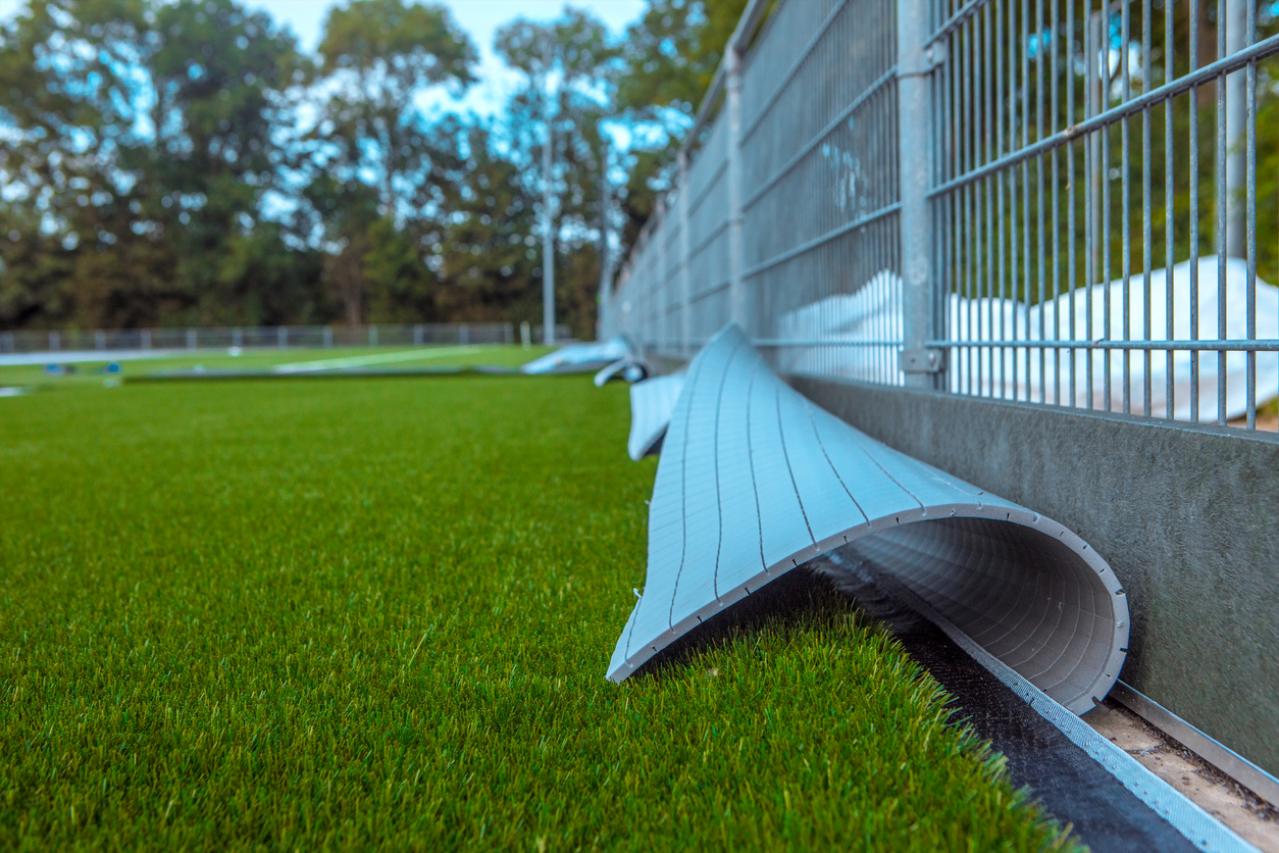
Design-quality turf for Woodlands commercial properties along Research Forest Drive and the Town Center corridor.

Pet turf for Woodlands residential yards with drainage-forward base and Spring Creek watershed drainage management.
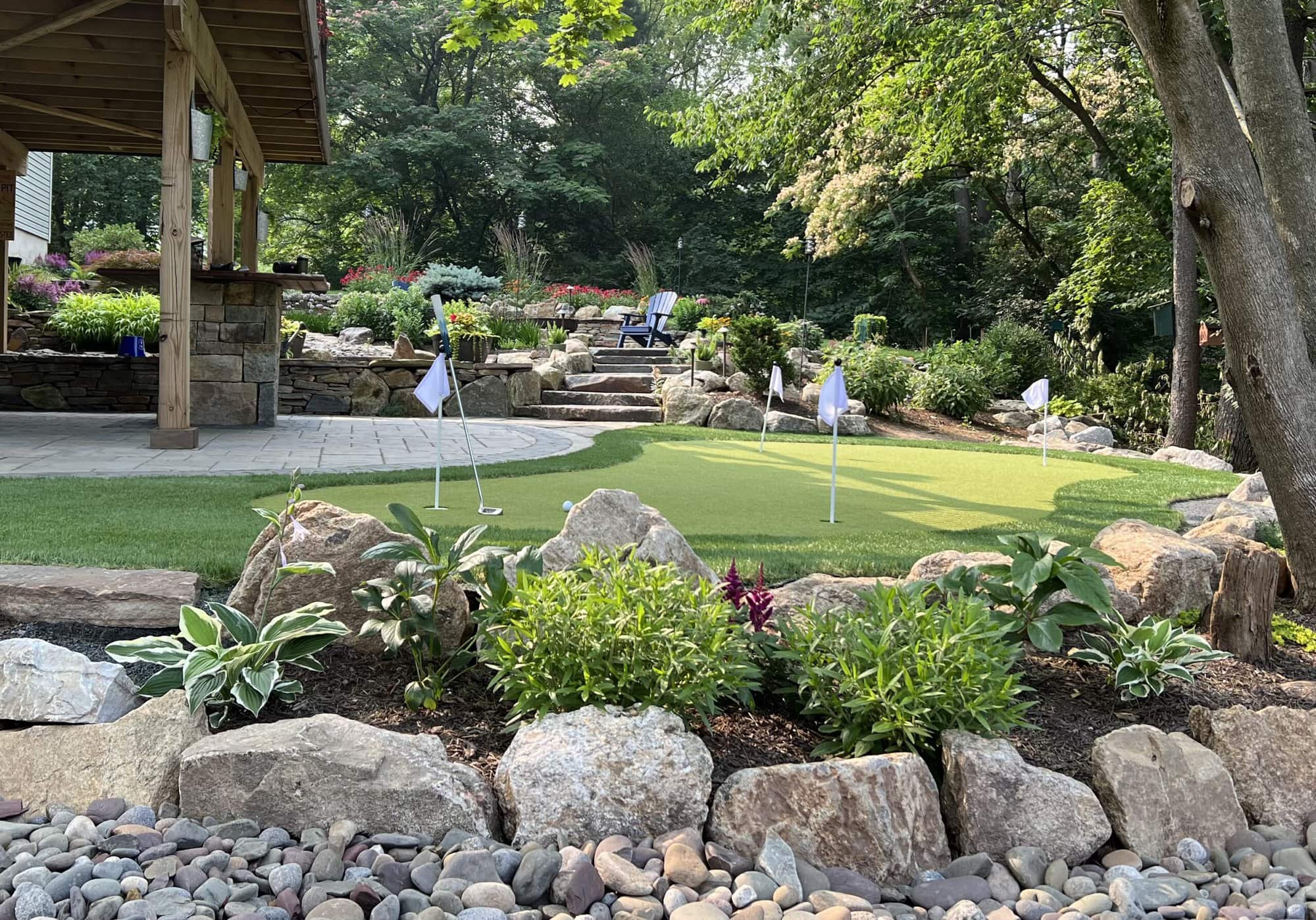
Custom putting greens for Woodlands residential properties with shade-adapted fiber and precision transition finishing.
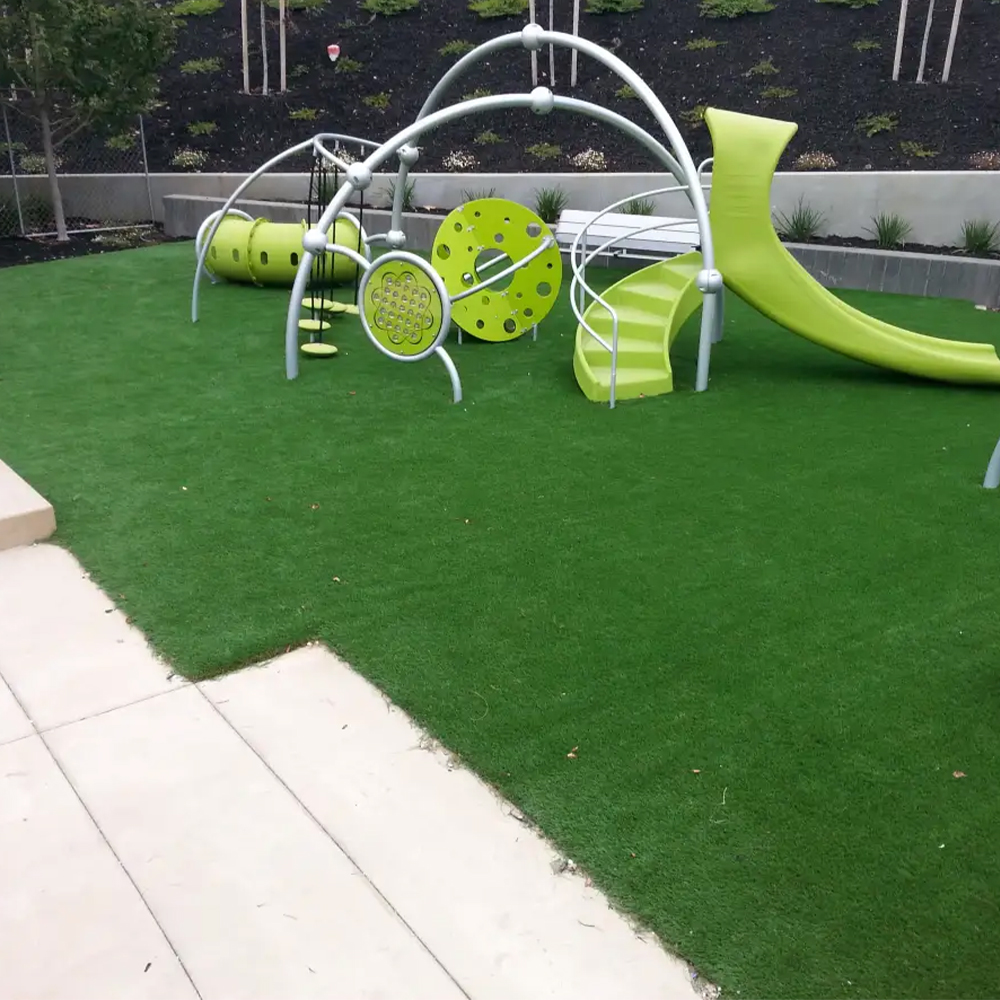
Safety-rated turf for Woodlands community recreation areas and private residential play areas.
Tree preservation is treated as the primary constraint in every Woodlands installation. We document canopy extent, map root flares, hand-excavate within the root zone, install breathable root-barrier membrane throughout the installation, and select base compaction methods that bridge root zones rather than pressing against them.
The organic layers in older Woodlands villages from decades of leaf and needle decomposition are too compressible and biologically active to serve as a stable substrate for the compacted aggregate base. They must be removed to mineral soil before any base material is placed.
We design drainage outlets that direct surface water toward established drainage channels connected to the Spring Creek system rather than retaining water beneath the base. Properties adjacent to the greenbelt also get reinforced edge anchoring to handle wildlife pressure from the greenbelt corridor.
Yes. We execute precision transition detailing at concrete, pavers, bedding edges, and fence lines to meet the design standards that Woodlands HOAs maintain. We also work with homeowners on turf product selection to ensure the finished surface meets the community's visual standards.
Three to four days for older village residential properties with significant organic-layer excavation and root mapping. Two to three days for newer village sections. We confirm after the tree-preservation assessment visit.
Send project details and timeline information to get route scheduling options for this location.
Call